









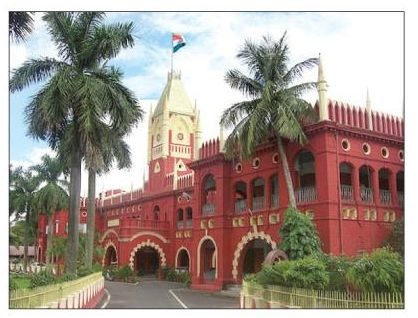
The Division Bench of Orissa HC dismissed a PIL challenging the circular issued by RBI and called it a publicity interest litigation in the garb of public interest. The court further stated that a publicity interest litigation should be nipped in the bud so that valuable time of the Court is saved which can be effectively utilized in reducing huge pendency of cases.
Brief Facts:
A PIL was filed under Article 226 challenging the circular issued by the RBI announcing the discontinuance of the circulation of two thousand-rupee notes and allowing people to exchange the same without any identity proof.
Contentions of the Applicant:
The petitioner contended that the RBI has not issued guidelines regarding the exchange of the notes which would have checked the unlawful entry of people into the banking system. It was further stated that RBI had not provided any reasons as to why not any other currency notes and only two-thousand-rupee notes’ circulation is being discontinued. It was further stated that this instruction was for the encouragement of converting black money into white.
Contentions of the Respondent:
The learned Deputy Solicitor General relied upon the judgment in Vivek Narayan Sharma and Ors. vs. Union of India which relied on the judgment in Tata Cellular vs. Union of India to state that the court must confine itself to the question of legality and its concern should be whether a decision-making authority exceeded its powers, committed an error of law, committed a breach of the Rules of natural justice, reached a decision which no reasonable tribunal would have reached or abused its powers and it is not for the court to determine whether a particular policy or particular decision taken in the fulfilment of that policy is fair, it is only concerned with how those decisions have been taken.
Observations of the Court:
The court referred to the recent decision by the Delhi High Court in Aswini Kumar Upadhyay vs. Union of India and Ors. wherein the same circular of RBI was challenged on the ground of it being arbitrary and violative of Article 14. The court in this case held that this decision is a policy decision and the court should not sit as an Appellate Authority over the decision taken by the government. The court also referred to the judgment in BALCO Employees’ Union (Regd.) vs. Union of India where it was stated that the wisdom and advisability of economic policies are ordinarily not amenable to judicial review unless it can be demonstrated that the policy is contrary to any statutory provision or the Constitution.
The court observed that PIL is a weapon that has to be used with great care and circumspection and the judiciary has to be extremely careful to see that behind the beautiful veil of public interest, a publicity-seeking is not lurking. It was further stated that a PIL should be used as an effective weapon for delivering social justice and should not be publicity oriented which is detrimental to the public interest at large.
The court stated that the present writ petition was a publicity interest litigation in the garb of public interest and should not be entertained.
The decision of the Court:
The court dismissed the petition as the same was devoid of any merits.
Case Title: Smt. Jayanti Das vs. Union of India and Ors.
Coram: Hon’ble Mr. Justice S.K Sahoo and Hon’ble Mr. Justice Murahari Sri Raman
Case No.: WP(C) No.17775 of 2023
Advocate for the Applicant: Mr. B.K Ragada
Advocate for the Respondent: Mr. Prasanna Kumar Parhi, Deputy Solicitor General of India
Read Judgment @LatestLaws.com
Picture Source :



















