









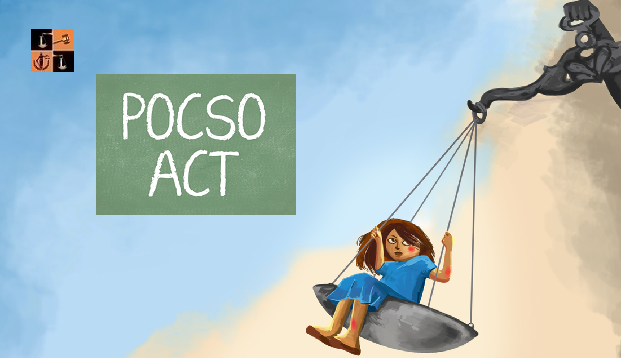
In a recent verdict, the Delhi High Court upheld the conviction of a man for committing rape on a four-and-a-half-year-old girl in June 2017. The court emphasized the significance of the victim's testimony while addressing the absence of injuries on the victim's private parts, asserting that it cannot be used as a sole determinant for negating the occurrence of penetrative sexual assault under the Protection of Children from Sexual Offences Act (POCSO).
Justice Amit Bansal, while delivering the judgment, stated that the mere absence of injuries on the victim's private parts cannot automatically rule out the possibility of a penetrative sexual assault. The court highlighted that injuries are influenced by various factors, including the depth of insertion, and their absence should not be considered conclusive evidence against the occurrence of the assault.
Brief Facts:
In the case before the Delhi High Court, the appellant was charged with committing heinous crimes against a four-and-a-half-year-old girl. The incident occurred on June 11, 2017, when the victim was playing outside her house. The victim's parents, concerned about her disappearance, searched for her and found her inside the house of the appellant, who was their neighbour.
The victim's father knocked on the appellant's locked door and called for the victim. After repeated attempts, the door was opened by the appellant, who was found dressed in his underwear and the victim was present in the room. The victim's parents were shocked when the victim disclosed that the appellant had taken her to his house, given her a drink, and then proceeded to remove her underwear and sexually assaulted her by inserting his finger into her private parts.
The victim's parents immediately informed the police, resulting in the registration of an FIR (First Information Report) under Section 376 of the IPC (Indian Penal Code) and Sections 4/6 of the POCSO Act. The victim was subjected to a medical examination, and an MLC (Medico-Legal Case) report was prepared.
The trial court, after considering the evidence and witness testimonies, convicted the appellant for offences under Sections 342/363/376 of the IPC and Section 6 of the POCSO Act. The appellant appealed against this verdict, raising arguments related to inconsistencies in the victim's statements and the absence of injuries on her private parts.
Appellant's Contentions:
The defence for the appellant raised key objections against the conviction. They highlighted contradictions in the victim's statements, where her trial testimony differed from her earlier accounts about the extent of the alleged assault. The appellant's legal team also pointed out the absence of any mention of penetration in the initial police report, questioning the consistency of the victim's narrative.
Moreover, they emphasized the absence of corroborating evidence, asserting that the prosecution's case solely relied on the victim's testimony. They referred to a precedent to argue that her testimony required significant corroboration due to inconsistencies.
Lastly, the defence noted the lack of injuries on the victim's private parts from medical examinations. This led them to suggest that the charges might not align with the more serious provisions of the POCSO Act.
State's Contentions:
The State countered the defence by highlighting the victim's consistent statements throughout the case, spanning police accounts, medical examinations, and trial. They argued that this reliability of the narrative strengthened the victim's credibility.
Addressing the issue of penetration, they stressed the victim's unambiguous trial testimony confirming the accused's act. They referenced a Supreme Court judgment, asserting that credible victim testimony could suffice for conviction under Section 376 of the IPC.
Observations by the Court:
Justice Bansal rejected the accused's appeal, noting that the victim's consistent testimony, supported by the corroborative statement of her mother, had effectively established the accused's guilt beyond reasonable doubt. The court emphasized that the minor contradictions in the victim's statements, especially considering her tender age at the time of the incident, did not undermine the credibility of her testimony. The court also highlighted the statutory presumption under Section 29 of the POCSO Act, which plays a role in cases of offences against children, and noted that the accused failed to successfully challenge the presumption or discredit the prosecution's evidence.
The decision of the Court:
The appeal was dismissed.
Case Name: Ranjeet Kumar Yadav Vs. State of NCT of Delhi
Coram: Hon’ble Mr. Justice Amit Bansal
Case No.: CRL.A. 50 of 2022
Advocates of the Petitioners: Mr. Gautam Khazanchi and Mr.Vaibhav Dubey.
Advocates of the Respondent: Mr. Pradeep Gahalot, APP for the State. SI Shashi, PS. Gulabi Bagh.
Read Judgment @LatestLaws.com
Picture Source :




















