









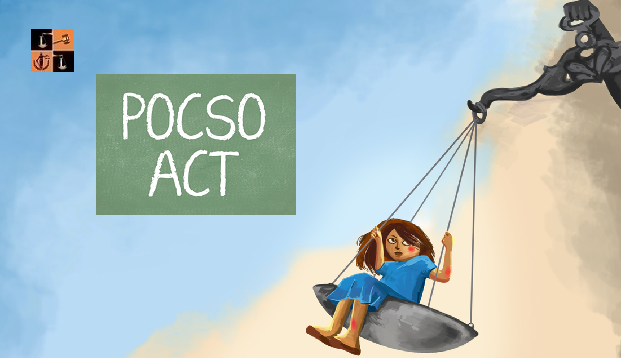
The Delhi High Court expounded that the Protection of Children from Sexual Offences Act, 2012, which strives to stop sexual crimes against children, did not discriminate based on the victim's marital status. This implies that whether the victim was married or not, they were equally eligible for protection and legal justice under the law.
Brief Facts:
The present writ petition has been preferred to contest the validity of Section 198(6) of the Code of Criminal Procedure, 1973 (hereinafter referred to as “CrPC”) claiming that it was unconstitutional and ultra vires because it was inconsistent with the Protection of Children from Sexual Offences Act, 2012 (hereinafter referred to as “POCSO Act”).
Contentions of the Petitioner:
It was argued that the Court should declare that Section 19, read with Section 21 of the POCSO, overruled the restrictions under Section 198(1), read with Section 198(3) of the CrPC.
An extension was requested for the limitation period to file a complaint by a minor victim of sexual abuse until two years after attaining the age of majority. It was submitted that Section 198(6) CrPC discriminates against minor girls who are victims of marital rape by restricting their right to legal remedy.
Further, it was argued that the POCSO Act overrides the Indian Penal Code, 1860, in cases of child sexual abuse, including marital rape of minors. Finally, it was requested that minor victims of marital rape be allowed to file a complaint until they turn twenty years old, in line with Section 3(3) of the Prohibition of Child Marriage Act, 2006 (hereinafter referred to as “PCMA”).
Contentions of the Respondent:
It was argued that they had already submitted the comments received from the Ministry of Home Affairs and the Ministry of Women & Child Development regarding the CrPC, the POCSO Act, and the Juvenile Justice (Care and Protection of Children) Act, 2015, in the writ petition.
It was contended that Section 3(3) of the PCMA did not apply to minor victims of marital rape. It was pointed out that Sections 472 and 473 of CrPC provided for the extension of the period of limitation in certain cases. Section 472 stated that in the case of a continuing offence, a fresh period of limitation would begin to run at every moment during which the offence continued. Section 473 allowed any Court to take cognizance of an offence after the expiry of the period of limitation if the delay had been properly explained or if it was necessary in the interests of justice.
Observations of the Court:
The High Court held that there is no separate categorization of child victims of rape based on marital status, as the POCSO Act comprehensively deals with sexual crimes against children. The Court also stated that when a general law and a special law deal with a common aspect, the special law prevails.
It was opined that Section 19, read with Section 21 of the POCSO Act, overrides the restrictions imposed under Section 198(1), read with Section 198(3) of the CrPC. The Court also clarified that it had not addressed the issue of marital rape of an adult woman in the proceedings. In addition, the Bench stated that Sections 472 and 473 of the CrPC empower Courts to extend the period of limitation in cases where the facts and circumstances of the case necessitate it.
The decision of the Court:
The Delhi High Court, thus, after considering the contentions of the parties, dismissed the Writ Petition.
Case Title: Independent Thought v Union of India & Anr.
Case No.: Writ Petition Civil No. 3811 of 2019
Coram: Hon’ble Mr. Justice Manmohan and Hon’ble Mr. Justice Saurabh Banerjee
Advocates for Petitioner: Mr. Vikram Srivastava Adv. and Ms. Shalu Adv..
Advocates for Respondent: Ms. Monika Arora, CGSC, Mr. Yash Tyagi Adv. and Mr. SubhrodeepAdv.
Read Judgement @LatestLaws.com:
Picture Source :




















