









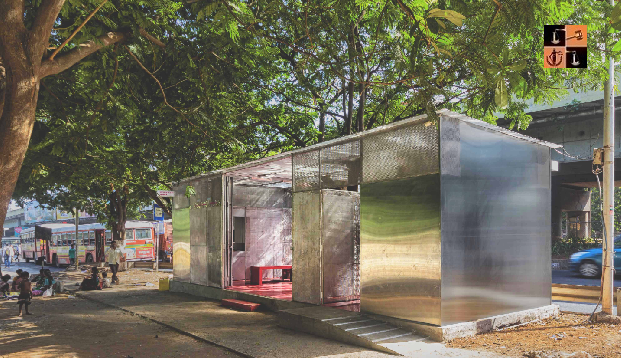
The Patna High Court recently comprising of a bench of Chief Justice Sanjay Karol and Justice S. Kumar observed that the Right to Sanitation has been virtually accepted as a Fundamental Right like the right to water, right to health, right to a healthy environment, right to education, and right to dignity directly related to the right of sanitation. (The National Highway Projects in the State of Bihar v. State of Bihar and others)
Facts of the case
The court was hearing a matter involving National Highway Projects in Bihar, in which the court had previously ordered the concerned agencies and stakeholders to provide public conveniences on highways, particularly National Highways, and to establish Petrol Pumps with such amenities.
The Court also expressed dissatisfaction with the lack of highway amenities in the land of Dr. Bindeshwar Pathak, who “revolutionized the nation of cleanliness in India” by building “Sulabh Sauchayalas” around the country.
Issues raised
1. Whether the failure of the authorities to finalize the setting up of Petrol Pumps leads to a violation of the rights of travelers?
2. Within the expanding area of Right to Life, does an entitlement of the right to sanitation arises, more so on the Highway, be it setting up of Petrol Pumps and providing facilities therein or otherwise?
3. What is the nature of obligations imposed upon the State to ensure the availability and upkeep of sanitation facilities on the Highways?
Courts Observation and Judgment
The Bench stressed the obligation of the part of the State in establishing good facilities for sanitation and personal care on the Highways or be it on the Petrol Pumps in the state. While hearing the case, the Court took into account the plight of women and the lack of adequate sanitation facilities on highways for them.
The Court observed, “Unlike women, men shamelessly stand on the Highways to ease off themselves, but a society cannot expect the same from the former and therefore it is an urgent duty upon the State/its instrumentalities to ensure that such needs, which are the very definition of basic needs, are met,”
Further, the Court said, “It is so unfortunate that in the land of Dr. Bindeshwar Pathak, who revolutionized the public health, hygiene and sanitation concept in India by establishing Sulabh Sauchayalas throughout the country that public toilets and proper sanitation facilities are nowhere to be seen.”
The court stated, "Bare necessities of life include proper sanitation facilities as the practice of open defecation or a life with polluted drinking water source and environment cannot be considered as a life of dignity as understood in the context of Right to life under the constitution.”
State is under obligation to provide basic amenities to the citizens on the Highways while ensuring that their right of sanitation/ basic amenities is not defeated".
Court opined that on a thorough examination of the statutory, constitutional, and international obligations that the Central and State governments were bound to follow, it was found that “the right to sanitation was virtually accepted as a fundamental right” by courts.
The court ordered that all Public toilets be adequately staffed for taking care and maintaining the same with a proper system for the disposal of sanitary napkins. Its the responsibility of the state to provide basic amenities to all the citizens while undertaking road travel, in light of the Constitution of India and the various international Human Rights obligations.
Further, The Chief Secretary and the Government of Bihar, to hold a meeting of all stakeholders to examine the best and most efficient way to realize the multifarious benefits arising from the establishment of petrol pumps.
Consequently, in furtherance of the above discussions, the Court issued the following directions:-
- The Chief Secretary, Government of Bihar, to convene a meeting of all stakeholders to examine the best and most efficient way to realize the multifarious benefits arising from the establishment of petrol pumps.
- The State, National Highways Authority of India and the Oil Marketing Companies consider constituting Public toilets and public conveniences at places easily identifiable and accessible by the public at large, and in this regard, signboards of "Public Toilets" or "Private Toilets" be displayed at the retail outlets.
- The amenities constructed should be done so, keeping in mind accessibility for persons with disabilities. The State has a responsibility to provide them equitable access to basic amenities while undertaking road travel, in light of the Constitution of India and the various international Human Rights obligations.
- All toilets be adequately staffed for taking care and maintaining the same with a proper system for the disposal of sanitary napkins.
- Authorities may also consider making it necessary/mandatory for all the Dhabas/ Restaurants on the highways to make available public toilets and drinking water facilities for the use of the general public. While granting permission to such establishments, authorities should consider incorporating specific conditions regarding the provision of toilets and restrooms.
- The authorities may consider the development of a mechanism to:- (a) institute a randomized checking system to ensure facilities and resources' quality and proper availability. (b) in consultation with OMCs and in furtherance of the Statutory obligation take constructive steps to ensure sustainable use of resources and all other related issues. (c) Prepare a digital platform furnishing complete information of such places of convenience to the general public with a provision of lodging online remarks.
Read Judgment @Latestlaws.com
Picture Source :



















