









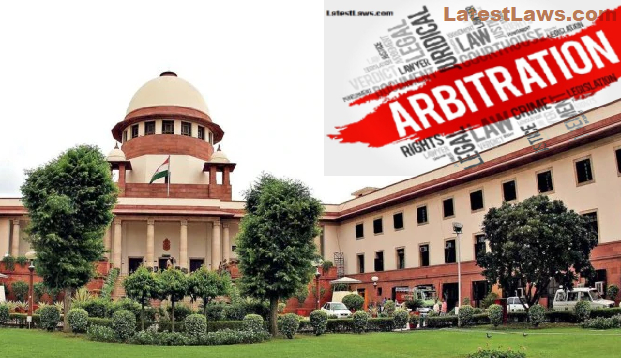
By observing that whenever there is a dispute and/or controversy that the mandate of the arbitrator is to be terminated on the grounds mentioned in section 14(1)(a), such a controversy/dispute has to be raised before the concerned court only and after the decision by the concerned court as defined under section 2(e) of the Act, 1996, the Supreme Court allowed the appeal assailing the order wherein the mandate of the sole arbitrator was terminated.
A Division Bench comprising Justice B.V. Nagarthana and Justice M.R. Shah while dealing with the present appeals assailing the order of the High Court of Madhya Pradesh in an arbitration case whereby the mandate of the sole arbitrator was terminated observed that the sole arbitrator was appointed by the parties themselves by mutual consent and in the absence of any written contract containing the arbitration agreement. Therefore, application under section 11(6) of the Act, 1996 in absence of any written agreement containing arbitration agreement was not maintainable at any cost.
The present appeals were preferred against the judgment and order dated September 7, 2017 passed by the High Court of Madhya Pradesh in an arbitration case and an order dated November 17, 2017 passed in a review petition whereby , the High Court by virtue powers conferred under Section 11(6) of the Arbitration and Conciliation Act, 1996 terminated the mandate of the sole Arbitrator appointed by the parties themselves and substituted the sole Arbitrator and appointed a fresh Arbitrator on the ground that the mandate of the sole Arbitrator stood terminated in view of Section 14 (1) (a) of the Act, 1996.
Relevant facts for adjudication of the present appeal were that a family dispute concerning the partition of the parties arose. The same was referred to the sole Arbitrator appointed by the parties themselves. However, fir and the third respondent herein, parties to the arbitration revoked the mandate of the sole Arbitrator through letters dated July 11, 2009.
Thereafter, first and the third respondent in the instant case filed applications under section 14(1)(a) of the Act, 1996 before the concerned Court to terminate the mandate of the sole Arbitrator on the ground of delay in concluding the arbitration proceedings.
In pursuance of the same, the appellant in the instinct case instituted an application under Section 14 of the Act, 1996 stating that there was no delay on the part of the sole Arbitrator and therefore there was no point of terminating the mandate of the sole Arbitrator.
The Trial Court, however, dismissed the application filed by the appellant.
Feeling aggrieved by the same, the appellant preferred the writ petition before the High Court. The High Court also dismissed the aforesaid writ petitions by appointing a fresh arbitrator on the ground that there was unreasonable delay on the part of the sole Arbitrator in concluding the proceedings.
It was this impugned order that was assailed by the appellant in the form of present appeals.
After hearing the contentions raised by the rival parties, the Court re-produced the provisions of the Arbitration and Conciliation Act, 1996 in order to comprehend the propositions raised by the parties in the instant case.
The Court observed that in the present case, the sole arbitrator was appointed by the parties themselves by mutual consent and in the absence of any written contract containing the arbitration agreement. Therefore, application under section 11(6) of the Act, 1996 in absence of any written agreement containing arbitration agreement was not maintainable at any cost.
In the words of the Court “there is a difference and distinction between section 11(5) and section 11(6) of the Act, 1996. In a case where there is no written agreement between the parties on the procedure for appointing an arbitrator or arbitrators, parties are free to agree on a procedure by mutual consent and/or agreement and the dispute can be referred to a sole arbitrator/arbitrators who can be appointed by mutual consent and failing any agreement referred to section 11(2), section 11(5) of the Act shall be attracted and in such a situation, the application for appointment of arbitrator or arbitrators shall be maintainable under section 11(5) of the Act and not under section 11(6) of the Act.”
It was also observed that it is even a settled proposition of law that once the arbitrator was appointed by mutual consent the dispute whether the mandate of the arbitrator has been terminated on the grounds set out in section 14(1)(a) of the Act, shall not have to be decided in an application under section 11(6) of the Act, 1996.
The Court further observed that in the instant case the proceedings before the concerned court under section 14(2) of the Act, 1996 at the instance of the first and the third respondent to terminate the mandate of the sole respondent under section 14(1)(a) of the Act were already pending before the
concerned court when the first respondent moved an application under section 11(6) of the Act and such a dispute was at large before the court in a proceeding under section 14(2) of the Act.
The next question which was posed for consideration of this Court was, whether, in exercise of powers under sub- section (6) of section 11 of the Act, 1996, the High Court can terminate the mandate of the sole arbitrator and substitute the arbitrator in view of section 14(1)(a) of the Act, 1996 on the ground that he has failed to act without undue delay and in such a situation aggrieved party has to approach the court to terminate his mandate.
In view of the same, the Court submitted that whenever there is a dispute and/or controversy that the mandate of the arbitrator is to be terminated on the grounds mentioned in section 14(1)(a), such a controversy/dispute has to be raised before the concerned court only and after the decision by the concerned court as defined under section 2(e) of the Act, 1996.
Another question of law that was adjudicated upon by this Court was whether the Trial Court was justified in rejecting the application submitted by the appellant, which was filed to reject the applications under section 14 of the Act, in exercise of powers under Order VII Rule 11 of CPC.
In pursuance of the same the Court observed that it is a settled proposition of law that while deciding the application under Order VII Rule 11 of CPC only the averments and allegations in the application/plaint are to be considered and not the written statement and/or reply to the application and/or the defence, thus seeing the context of the application, the Court observed that the Trial Court was right in its observation that there was no delay on the part of the sole Arbitrator.
In light of the aforesaid observations the impugned judgment and order passed by the High Court was accordingly quashed and set aside. It was further observed that the question with respect to whether the mandate of the sole arbitrator under section 14(1)(a) of the Act, 1996 stands terminated or not shall have to be considered by the court on an application filed under section 14(2) of the Act, 1996. Thus, the present appeals were allowed, however the appeals assailing the judgment of the Trial Court whereby the application under Order VII Rule 11 of CPC was rejected were dismissed.
Picture Source :



















