









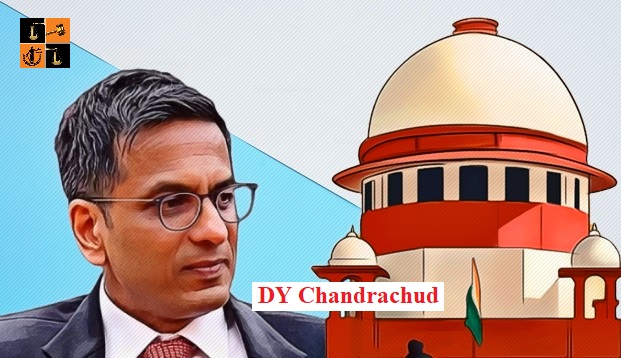
On 31st October 2022, the Supreme Court in a Division Bench comprising of Justice Dr. Dhananjaya Y Chandrachud and Justice Hima Kohli observed that “Whether a woman is “habituated to sexual intercourse” or “habitual to sexual intercourse” is irrelevant for the purposes of determining whether the ingredients of Section 375 of the IPC are present in a particular case”. (The State of Jharkhand Vs. Shailendra Kumar Rai @ Pandav Rai)
Facts of the Case:
It was alleged that the respondent entered the house of the victim and deceased in Narangi village, on 7 November 2004. It is alleged that he pushed her to the ground and committed rape upon her, while threatening to kill her if she sounded an alarm. She called out for help, at which point the respondent allegedly poured kerosene on her and set her on fire with a matchstick. Her cries for help led to her grandfather, mother, and a resident of the village to come to her room. The respondent is alleged to have fled the scene upon seeing them. The victim was taken to the hospital and the station in-change at PS Sarwna got information regarding the incident and travelled to Deoghar, where he recorded the victim’s ‘fard beyan’ on the same day. FIR No. 163 of 2004 was registered on the basis of the statement of the victim and the investigation commenced. Upon the completion of the investigation, the IO submitted a charge-sheet under Section 173 of the Code of Criminal Procedure 1973 for offences under Sections 307, 341, 376 and 448 of the IPC. The victim died on 14 December 2004, leading to the submission of a supplementary charge-sheet against the respondent, with reference to Section 302 of the IPC. By its judgment, the Sessions Court convicted the respondent of offences under Sections 302, 341, 376 and 448 of the IPC declaring that the dying declaration was voluntary, credible, and did not suffer from any infirmities. The respondent preferred an appeal before the High Court of Jharkhand. By its judgment dated 27 January 2018, the HC set aside the judgment of the Sessions Court and acquitted the respondent. Aggrieved by the same, present appeal was filed.
Contentions of the Appellant:
The counsel for the appellant submitted that “the High Court has not appreciated the evidence correctly: Dr. RK Pandey was attending to a patient on the table adjacent to the deceased, and not to a patient in a room adjacent to the one in which the deceased was present; and the post-mortem examination of the deceased was conducted within 12 hours of the time of death. The post-mortem report concluded that the cause of death was septicemia due to the burn injuries sustained by her.”
Contentions of the Respondent:
The counsel for the respondent submitted that “although the dying declaration indicates that the respondent raped the deceased, the Medical Board’s report stated that no definite opinion could be given in this regard. There is no evidence other than the dying declaration to show that the respondent raped the deceased; and the victim died around a month after the occurrence of the incident complained of. The statement made by the deceased to the IO is therefore not a dying declaration.”
Observation and Judgment of the Court:
The hon’ble court observed that “the HC reliance on the case of Moti Singh is misplaced because in the present case, the post-mortem report establishes that the victim died as a result of septicemia caused by her burn injuries. Therefore, the statement of the victim in the present case is indeed a statement relevant as to the cause of her death and in regard to the circumstances which eventually resulted in her death, as elaborated upon in the subsequent segment. The statement satisfies the conditions laid down in sub-clause (1) of Section 32 as it relates to both, the cause of death as well as to the circumstances of the transaction which resulted in death. Hence, it shall be considered as a dying declaration made voluntarily and the same is true.” While going through the testimonies of the witnesses, the SC observed that “prosecution proved its case beyond reasonable doubt before the Sessions Court and HC ought not to have overturned the given judgment.”
Parting Remarks:
SC observed that while examining the victim, the Medical Board conducted what is known as the “two-finger test” to determine whether she was habituated to sexual intercourse. The so-called test is based on the incorrect assumption that a sexually active woman cannot be raped. The probative value of a woman’s testimony does not depend upon her sexual history. It is patriarchal and sexist to suggest that a woman cannot be believed when she states that she was raped, merely for the reason that she is sexually active. The legislature explicitly recognized this fact when it enacted the Criminal Law (Amendment) Act 2013 which inter alia amended the Evidence Act to insert Section 53A. In terms of Section 53A of the Evidence Act, evidence of a victim’s character or of her previous sexual experience with any person shall not be relevant to the issue of consent or the quality of consent, in prosecutions of sexual offences.
The Union and the State Government were directed to Review the curriculum in medical schools with a view to ensuring that the “two-finger test” or per vaginum examination is not prescribed as one of the procedures to be adopted while examining survivors of sexual assault and rape.
The appeal was allowed and the judgment given by the session court was upheld, quashing and setting aside the judgment given by the HC.
Case: The State of Jharkhand Vs. Shailendra Kumar Rai @ Pandav Rai
Citation: Criminal Appeal No 1441 of 2022
Bench: Justice Dr. Dhananjaya Y Chandrachud and Justice Hima Kohli
Date: October 31, 2022
Read Judgment @Latestlaws.com
Picture Source :



















